
GM Senior Compact Classics
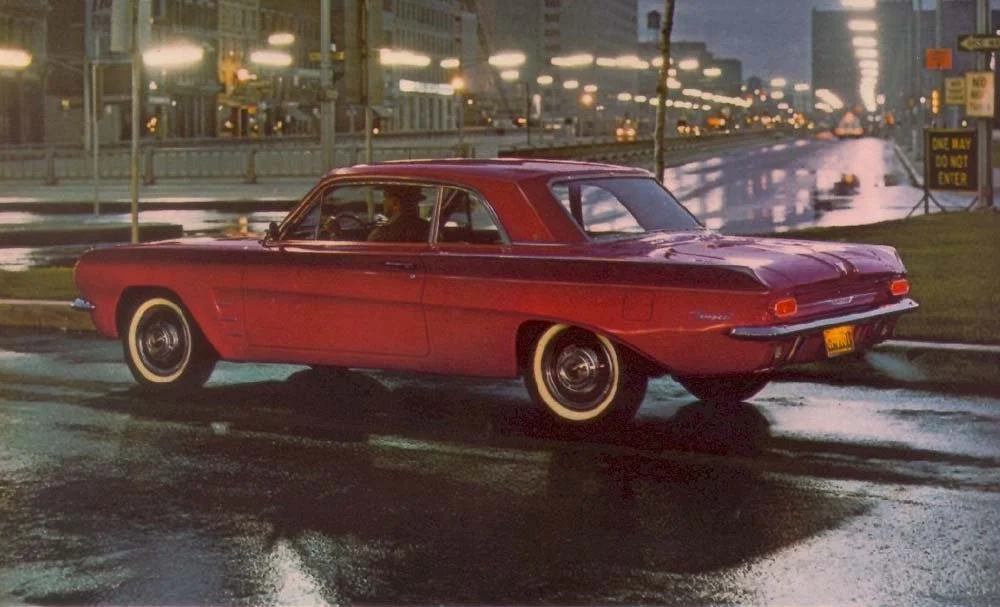
1962 Pontiac Tempest
When I was a kid one of these cars left an impression on me, and the story might surprise you.
My family had moved to a very small rural development of about 6 houses surrounded by farm fields and a large wooded area. My neighbors and I were out exploring the woods one day when they said they had gone farther in than ever before, and there was this old car out there rotting away. I was a car enthusiast from the moment I could pronounce the word, so of course I was down, even if I’d be out of range of my Dad’s “come home” whistle. We stumbled through a spot where clearly nobody had been in a long time until we came upon the rusty hulk of an early ‘60’s Oldsmobile F-85 Convertible. I had read enough of the internet to recognize the aluminum 215 V8 which was sitting proudly in the chassis as the front clip rotted into the earth. The F-85 emblem was still intact on the passenger side of the dash, too. I don’t think I ever forgot this car, and it must have been sitting in the back of my mind until recently when I started thinking about these early ‘60s GM compact cars again.
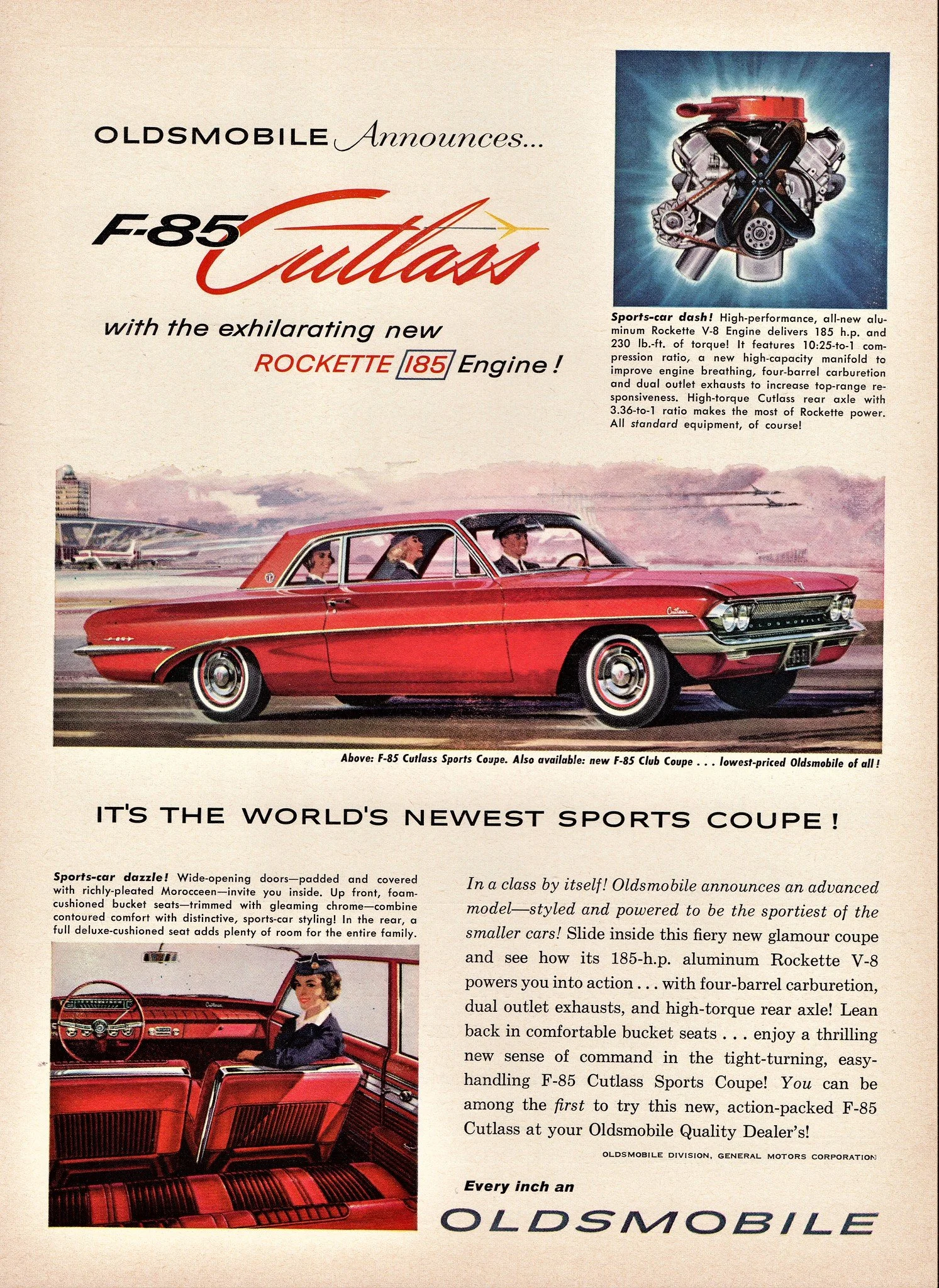
1961 Oldsmobile Advertisement
Known as the “Senior Compacts” for being a little larger and in-charger than the Chevrolet siblings Corvair and Chevy II. Introduced in the fall of 1960 for the ‘61 model year, the fraternal triplets were a little ill-received in their day, and may be all but overlooked this day in age. In a late night Facebook Marketplace scroll session, you might mistake one of these for their big car siblings without any context.
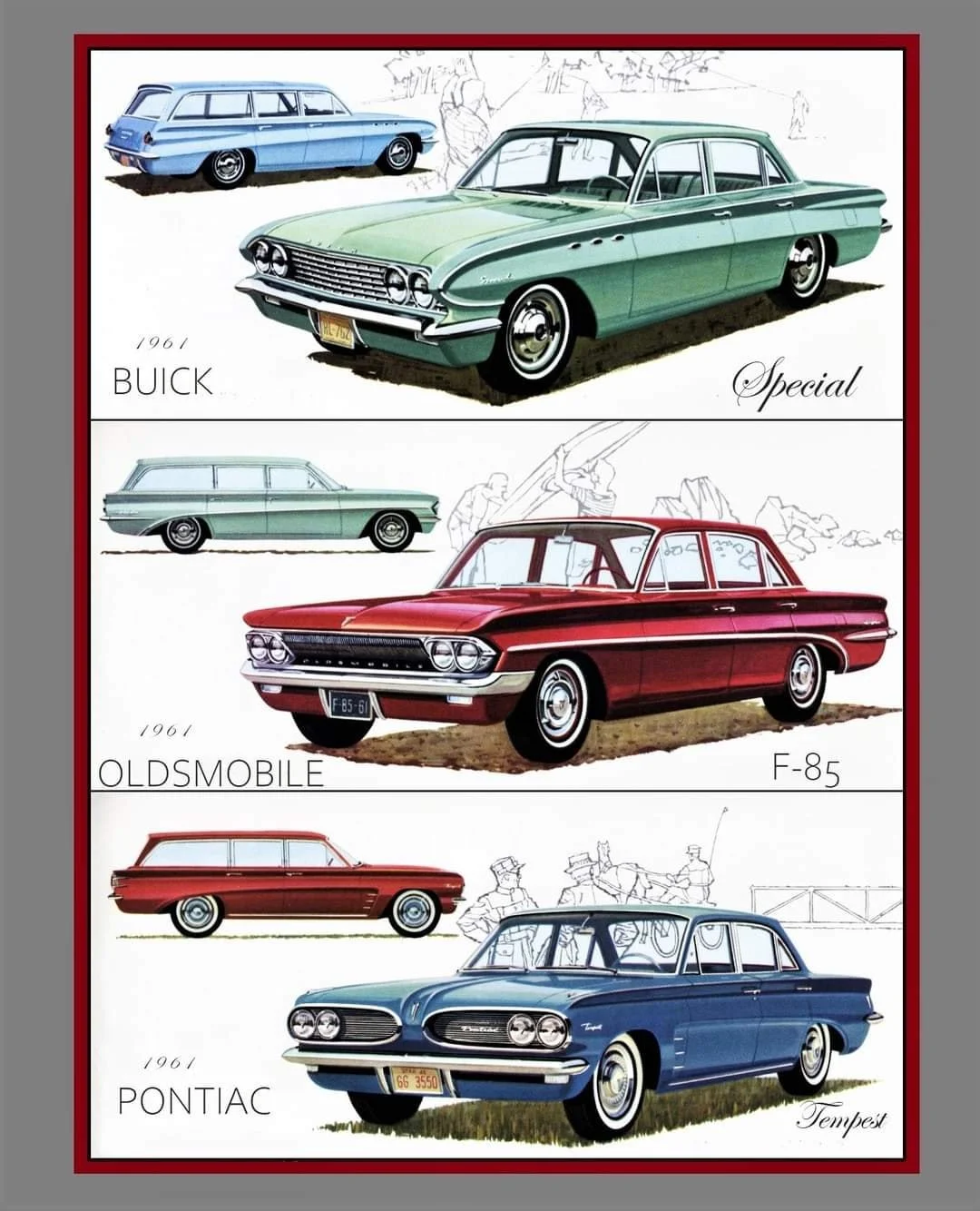
You can see clearly in this image how the doors and roof were the same across the three different models.
The styling on these cars reflected that of the aforementioned bigger GM siblings of the day, but interestingly enough, the three models all shared a roofline, glass, and door stampings. They also shared some inner structure with the Corvair. The front and rear sheetmetal made each one unique, and gave them their own visual personality, even if the general public had a hard time telling them apart in the ‘60’s. In ‘63, the cars got a much more boxy, contemporary styling treatment, and in my opinion, lost some of their charm. The early model years were styled, yet understated. The sweeping lower body line that shaped the rear wheel opening just really does something for me. Their understated little tailfins and the rooflines that mimicked the larger sedans and coupes all come together into a handsome little package.
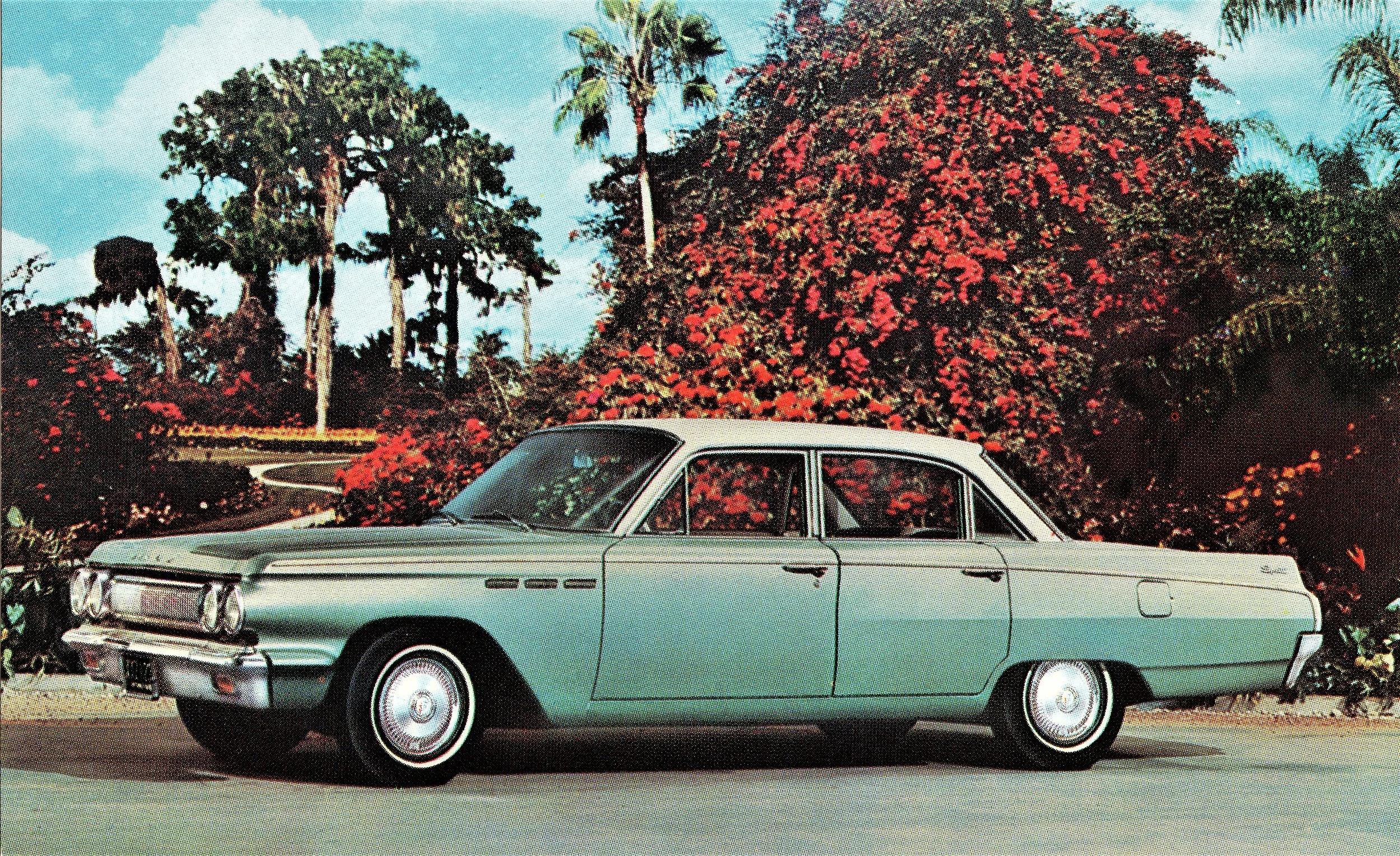
A 1963 Buick Special exhibiting the boxier styling for the model year.
Their personalities were more than just skin deep. I’m just gonna come out and say it, OK? I like the Tempest the most. It’s just too weird to ignore, and that’s the kind of guy I am. The Tempest came standard with an engine Pontiac called the Trophy 4, which was essentially only the right bank of cylinders of their larger 389 V-8 available in the large barges. The engine displaced 194.5 cubic inches, and made anywhere from 110 to 166 horsepower. The upmarket Tempest models used the same 215 aluminum V-8 as was available in the Buick, but in ‘63, an engine known as the “336” (which actually displaced 326 cubic inches) replaced it. This larger V-8 was based on the big car engine and was a test bed that paved the way into the impending muscle car era as the Tempest/LeMans moved to a larger, more conventional Chassis in ‘64.
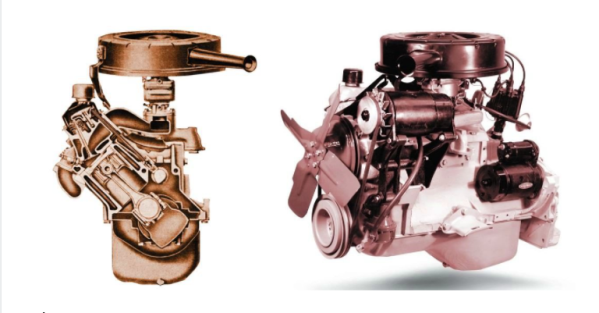
Pontiac Trophy 4 engine
Also notable about the Tempest was its unique driveline arrangement. The “Rope Drive” as Pontiac called it, or the flexible driveshaft as a lot of people know it, was essentially a torque tube with a small-diameter driveshaft bent in an arc that was designed to eat up the torque pulses from the vibration-happy slant-4 white also having a flat floor inside the passenger compartment. The Corvair-derived transmission was mounted in the rear and utilized a swing axle independent suspension akin to early Volkswagens.
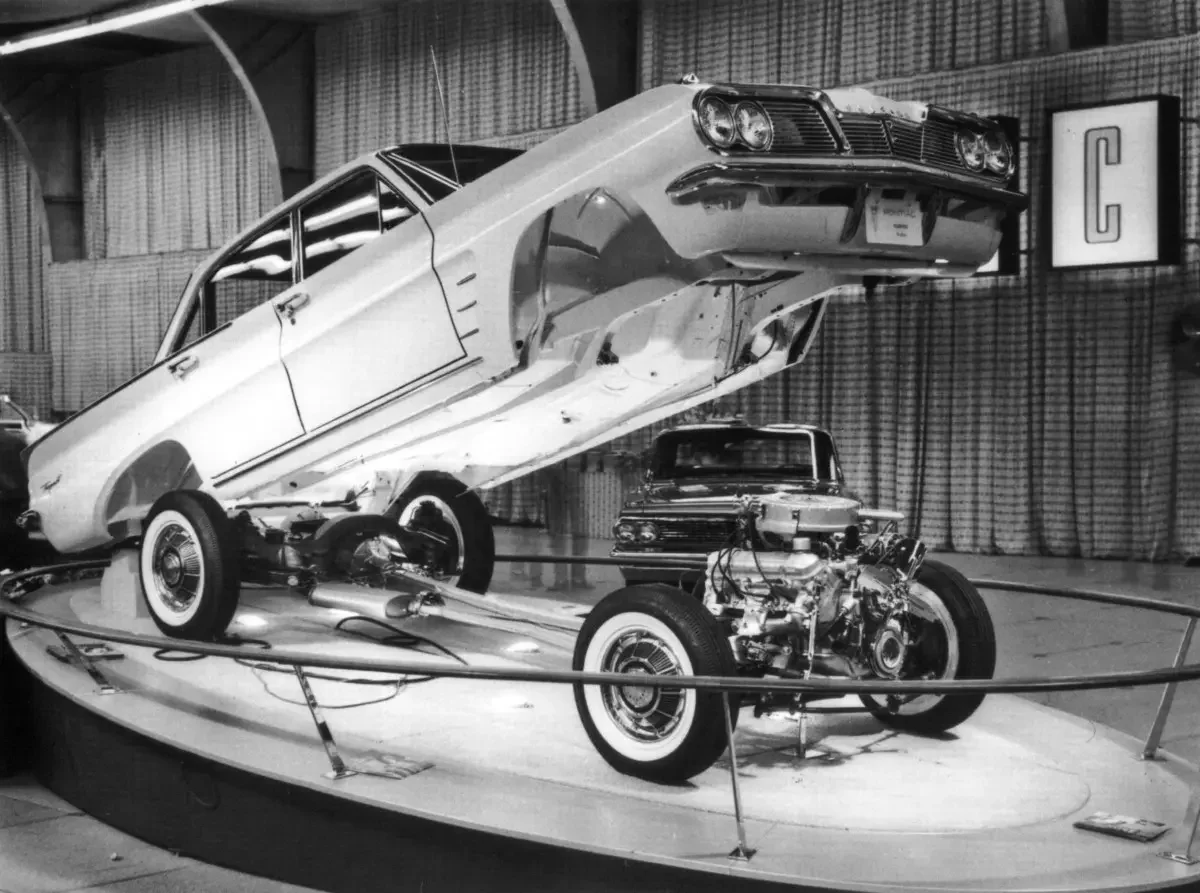
This unique display shows the unconventional driveline arrangement of the Tempest.
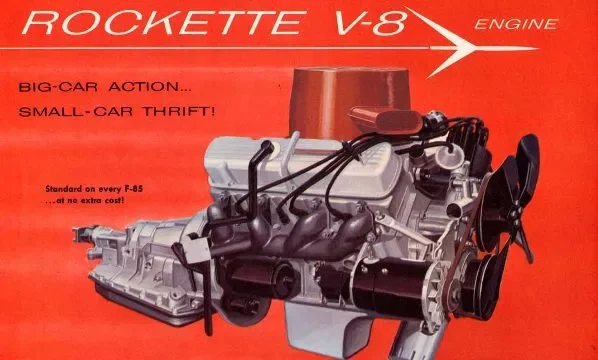
The Oldsmobile version of the 215 aluminum V-8
The Pontiac wasn’t the only one with tricks up it’s sleeves. The Buick and Olds had their own things going on.. While they both shared the basic 215 cubic inch aluminum V-8, each division used their own unique cylinder heads, camshafts, and induction setups to differentiate themselves from the other. The Oldsmobile version was known as the “Rockette V-8.” In ‘62 and ‘63, they were putting boost to the little 215 in the Jetfire model. The Jetfire’s claim to fame was one horsepower per cubic inch, which was quite the mark to hit in its day. Being one of the first production cars equipped with a factory turbocharger, it faced a few issues. To keep cylinder temperatures down there was a special tank that held “Turbo Rocket Fluid” which was fed into the intake tract to produce a cooling effect.
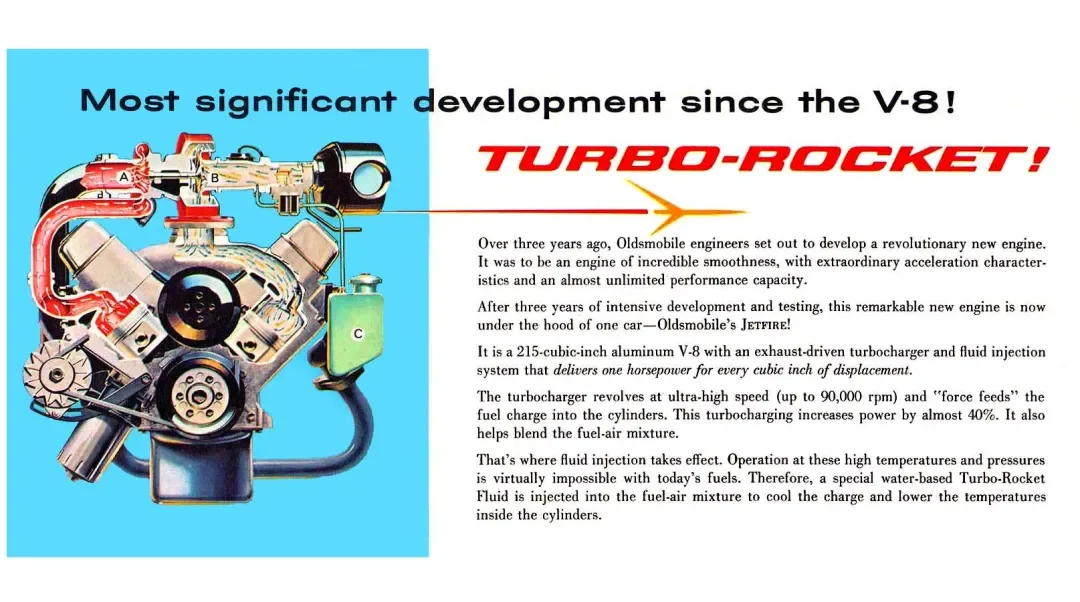
The Turbo-Rocket Engine
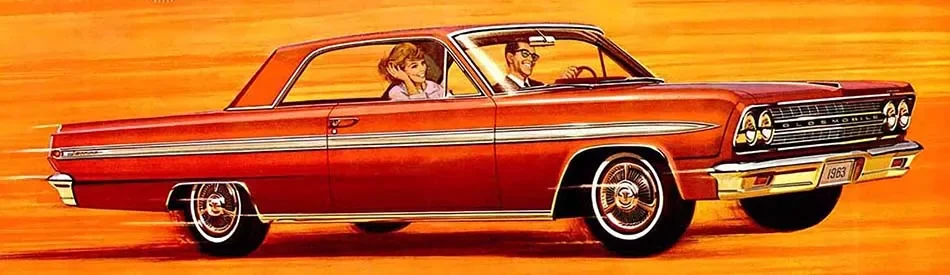
The 1963 Olsmobile Jetfire Sport Coupe
Buick was the design leader for the 215 aluminum V-8. Eventually this engine would produce 200 horsepower with a 4-barrel carburetor and an 11:1 compression ratio by the end of its run in 1963. In 1962. This engine would later be bought by Rover and stay in production across the pond for decades to come. The stripper model Buick Special got America’s first V-6 available in a passenger car. The little V-6 known as the “Fireball V-6” was the 215 V-8 without two of its cylinders. The unusual 90-degree bank angle of the Fireball V-6 engine gave it a distinctive sound. You probably know this engine as the odd-fire V-6. It would eventually be refined into the Buick V-6 that we have all had experience with in one way or another: the venerable “3800” V-6.
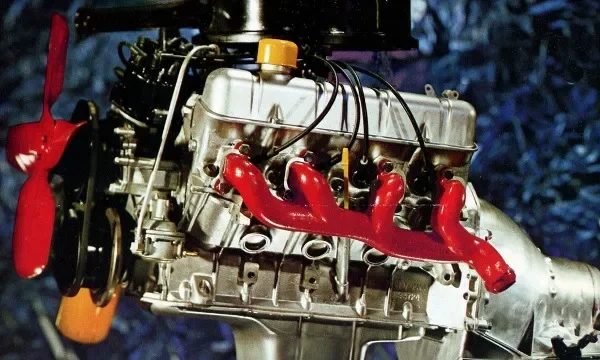
Buick’s all new for ‘61 all aluminum 215 V8
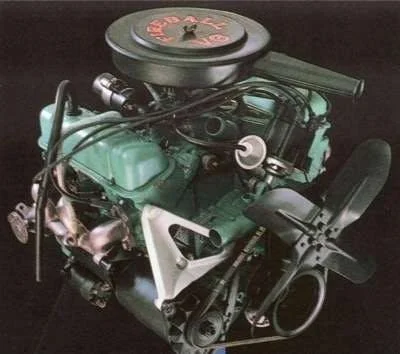
The Buick Fireball V-6
Looking back, these cars were all pioneers in their own ways. They were ahead of their time. Even if they weren’t understood in their day, they served as test beds for some of the greatest GM technologies we have had our fingers on in this century.
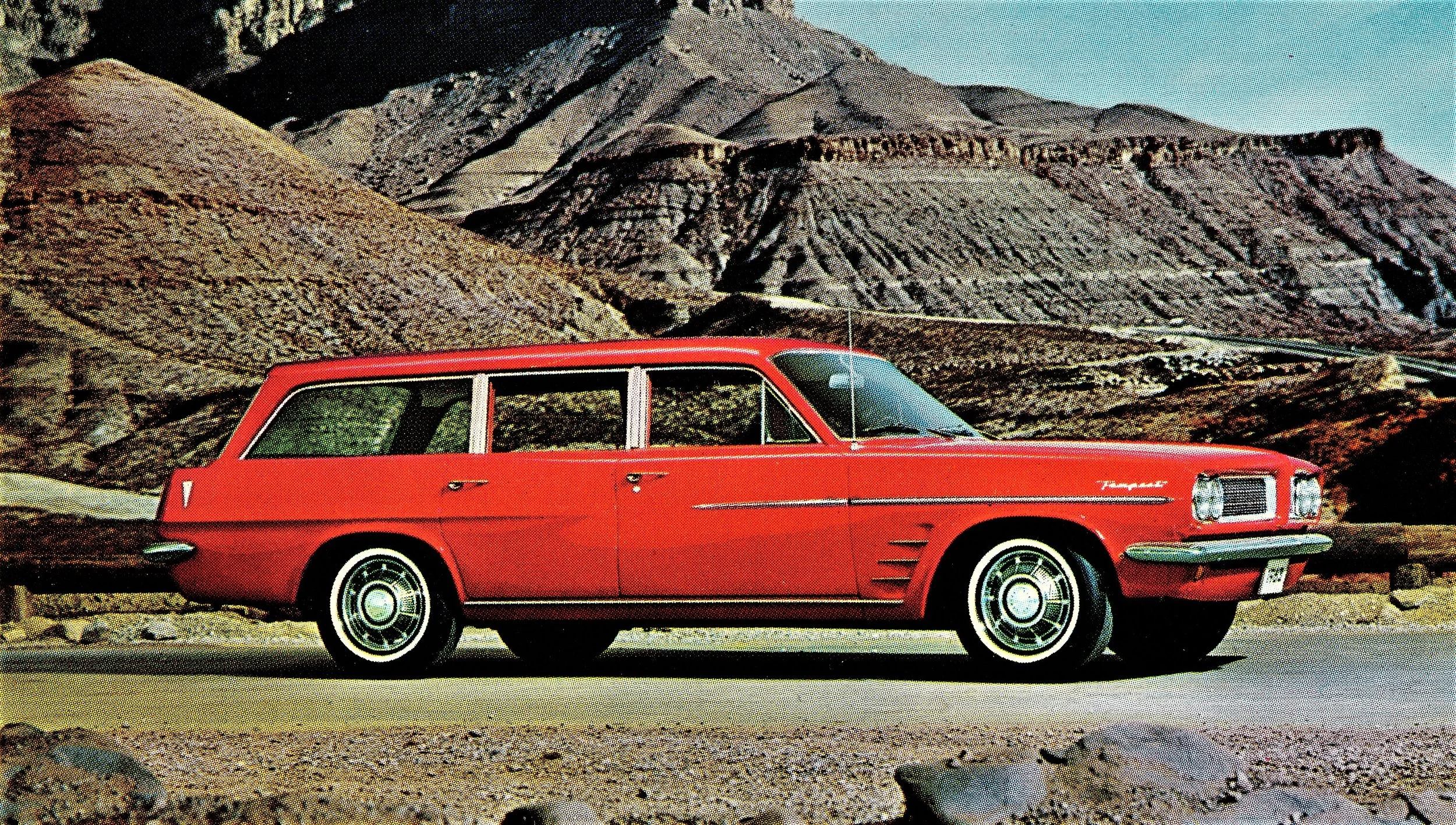
1963 Pontiac Tempest Wagon
As for me, I like to look at these cars in a bit of a different way. I’ve always thought any one of these models would make for a unique early ‘60’s mild custom or even just a cool old daily driver. If I had a spot to fill in my garage for one of these, it would have to be the Tempest. I said it earlier, but they’re just too weird for me to ignore. Give me a ‘61-’62. Take a few of the styling elements for example: the front end echoes the wide track styling of the big boy Poncho, and the baby tailfins, the cove in the body side that starts in the front fender, they all just do something for me. If you pulled up in one of these compacts, you’d stand out from the usual custom crowd without a doubt. Give it a healthy drop, some bellflower tips, and some of those pointy late-50’s Plymouth caps and skinny whites… we might be onto something here.
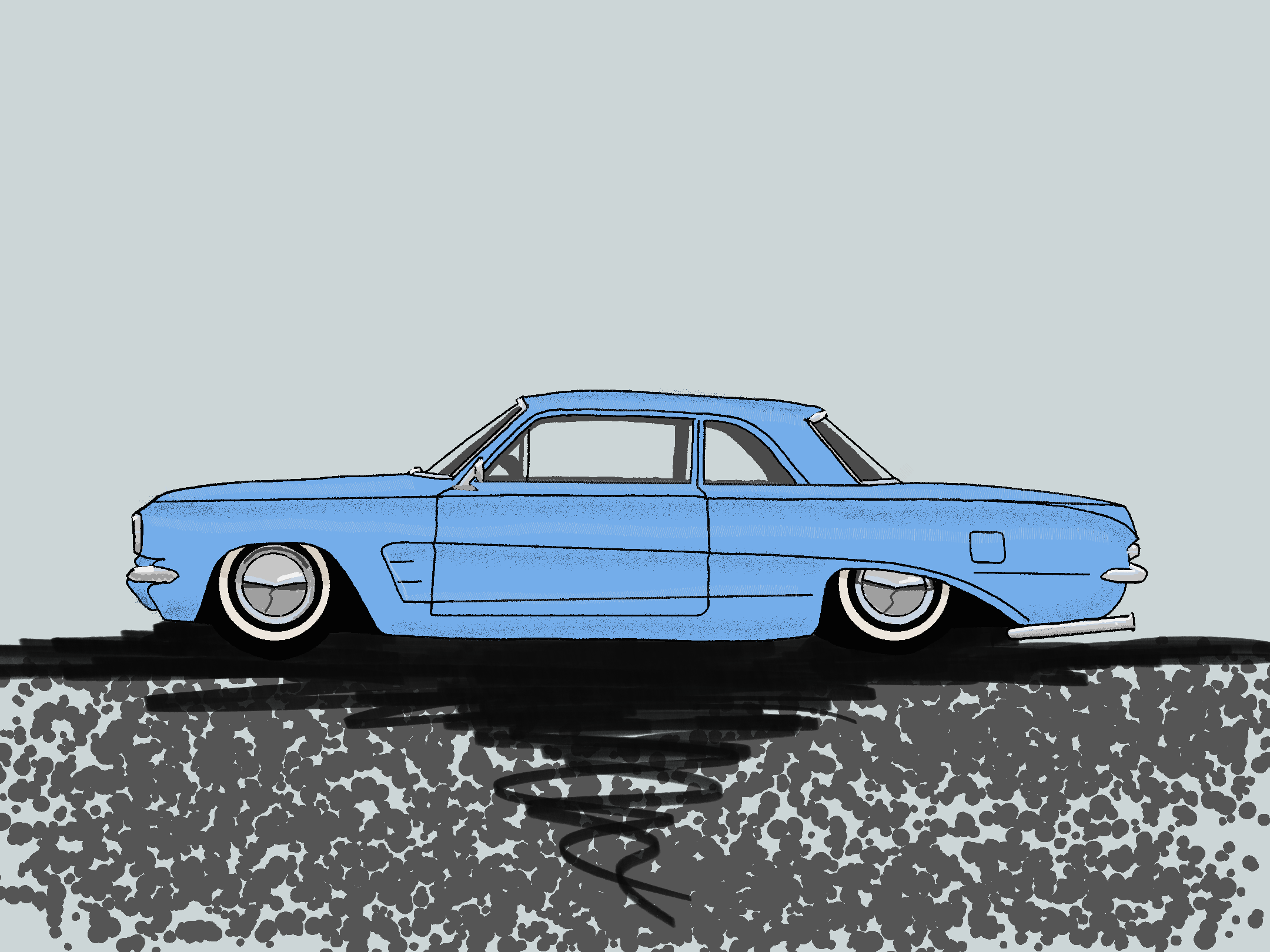
My art concept for a mild custom based on an early ‘60’s Tempest
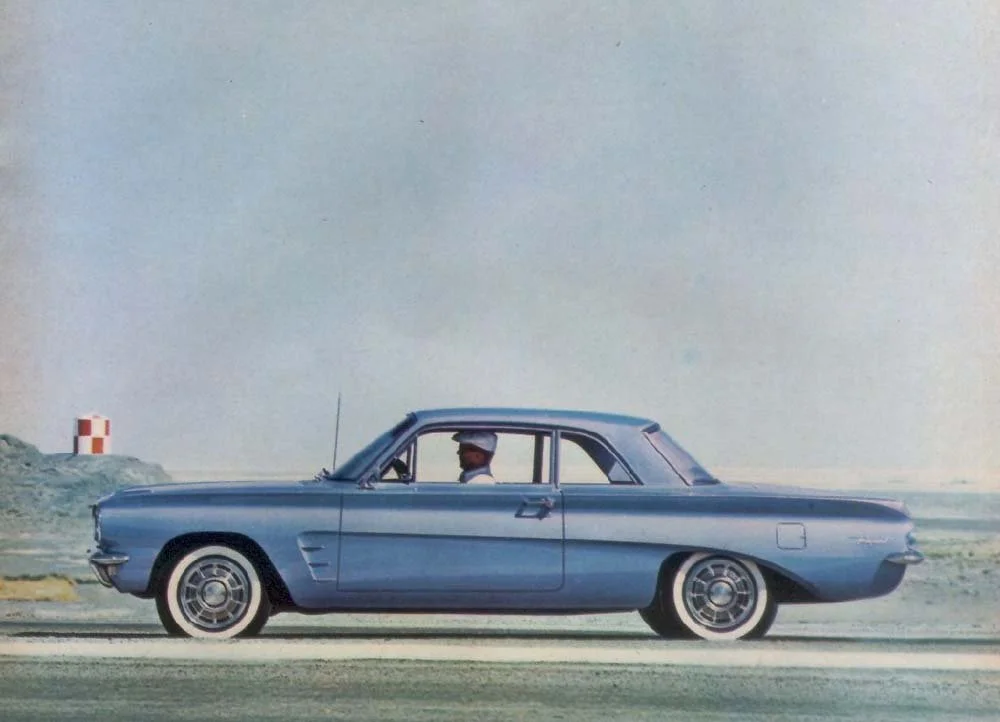
A box stock Tempest