
The Fordillac: Opportunity, Ingenuity, and Restrained Style
In Lebanon, Missouri, 1953, a man saw potential through wreckage. The story of the car we see here today began with two cars most people would have given up on and a vision to create something unique.
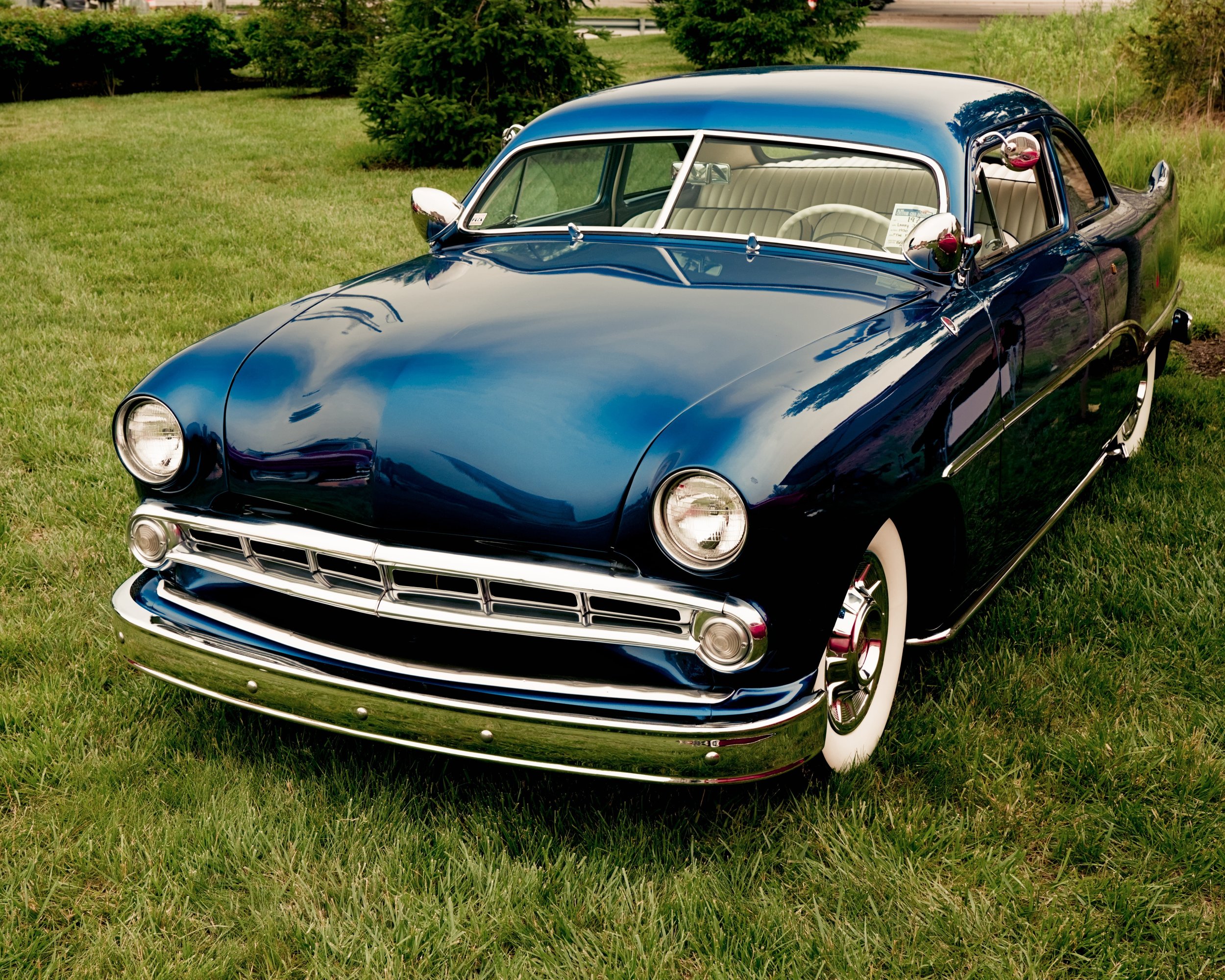
Subtle design choices make this whole car stand out.
Post-war ingenuity and opportunity came together through the mind and hands of Carlos Jenkins. His approach to modifying a wrecked 1950 Ford Coupe was to create something never seen before by integrating a few standout custom touches to a tastefully modified car. The other crash victim, a ‘49 Cadillac donated its tail lamps and surrounding sheet metal to the build, and the lamps and surrounding sheet metal were molded into the rear quarters of the Ford. The most subtle form of the Cadillac tail fin was enough to bring up the style of the coupe’s rear quarters to something that made a car worthy of its own nickname: The Fordillac.
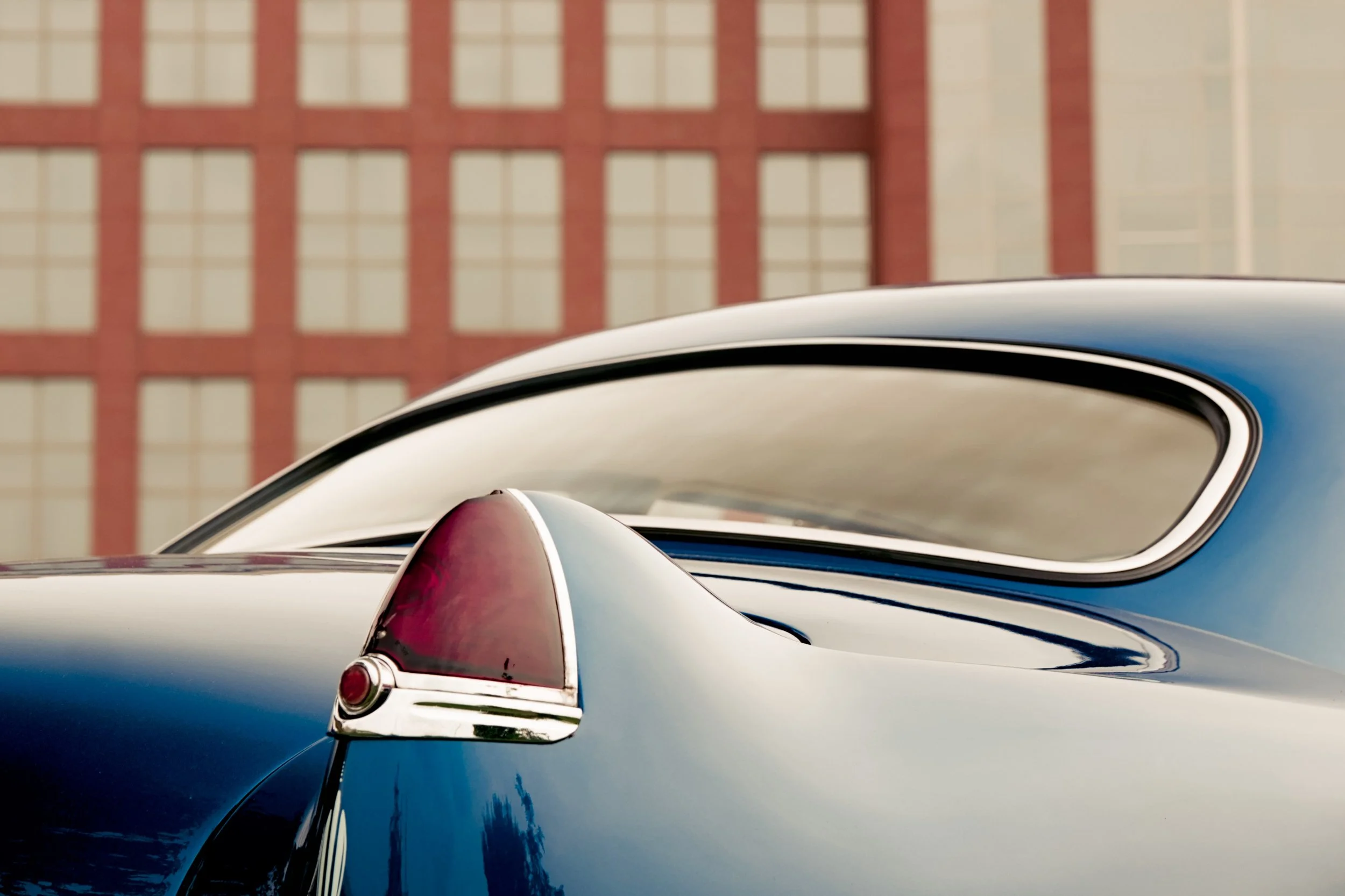
The Cadillac tail lights bring some understated, yet obvious flair to the rear of the car.
At the other end of the car Carlos wanted something else outside the typical parts chosen to fill the grill in customs of the day. The thing about the ‘53 Dodge grill is that it’s the understated, clean lines that grab your attention, similar to the tail lights. He swapped the hood out for a ‘51 Ford part to eliminate the cutout for the bullet that would have been in the original grill.
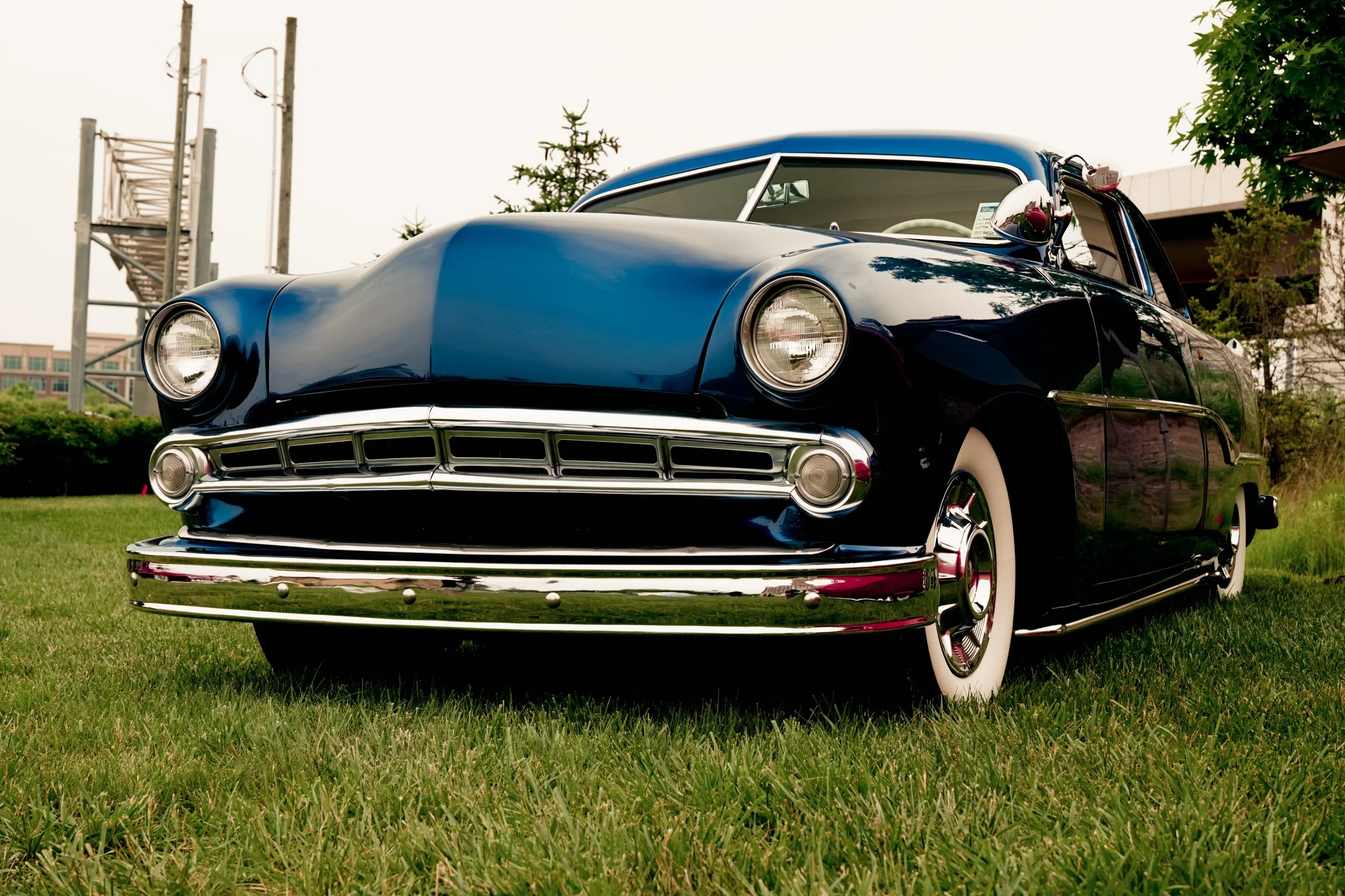
The Dodge grill on full display
The rest of the coupe got the book when it came to customs of that time period. The 3 1/2” chop was done “the Winfield way” as Larry Jenkins, the son of Carlos and current owner and caretaker of the car recalled. The pillars were sectioned, the roof moved down, and a section was fabricated to fill in the middle of the roof. This also gives the roof a bit of a different profile when compared to the standard way most people were chopping shoebox Fords at the time. The headlights were frenched, the hood, trunk, and door handles were shaved, and the car wore a light shade of yellow up front and the roof and rear were painted white.
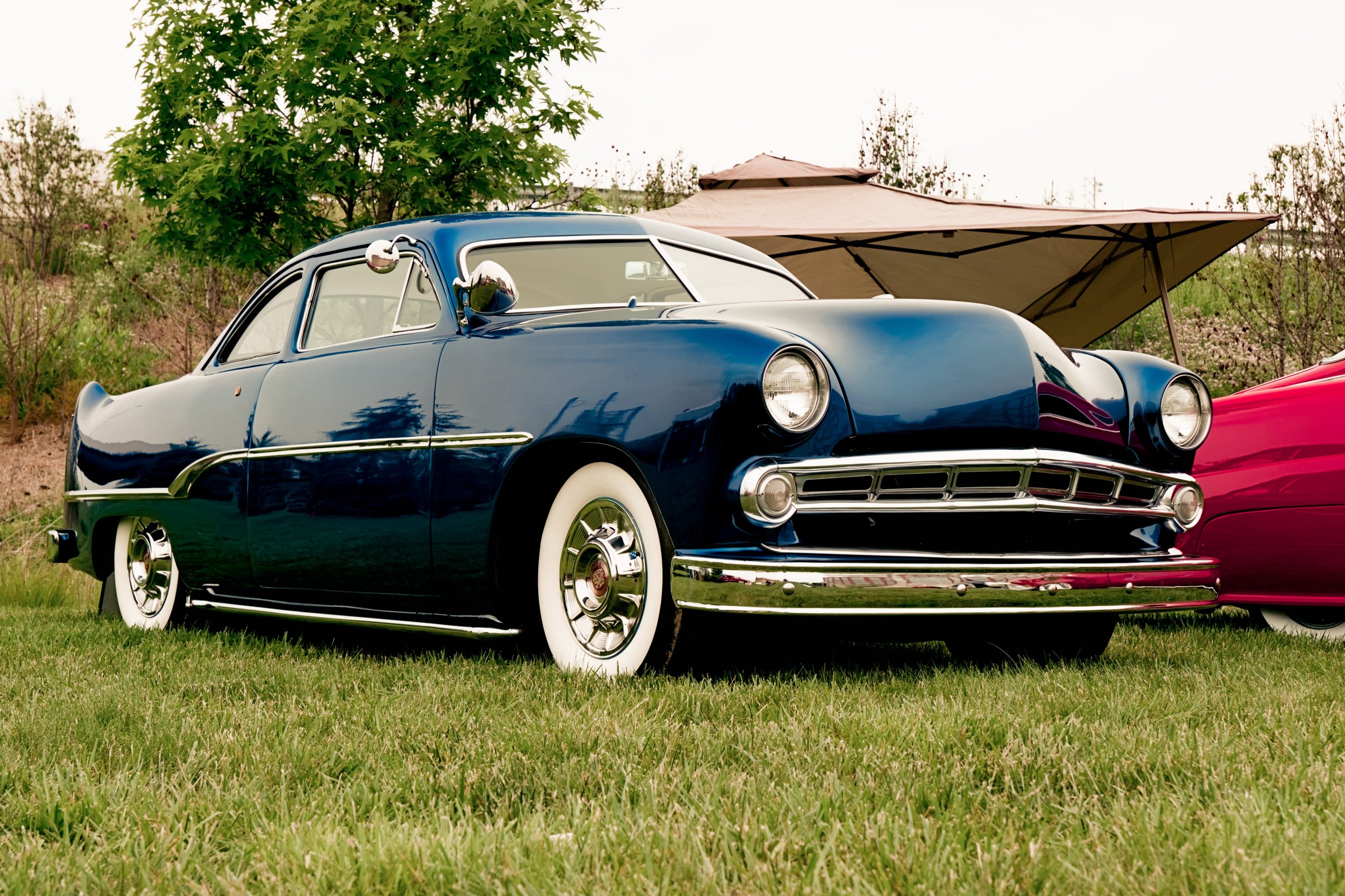
The subtle tail fins, side trim, grille, and chop bring a cohesive style to the car that’s restrained, but will still grab your attention.
Larry, who drove the car when he was in high school in the mid 60’s had the car painted green, and kept all the major body modifications intact. When it comes to a story like this there is a choice between two paths: preservation and evolution. Larry hung onto the car all these years, and managed to pull off a rare combination of both. He had the car blown apart and a top notch paint job laid down in a beautiful shade of blue that keeps with the restrained, but eye-catching theme the car has held since it’s inception back in ‘53. In it’s current form, the blue coupe sports upside-down ‘53-54 Dodge side trim that shows that a unique vision and an eye for overall style runs in the family. It’s the little things that can make or break a traditional custom, and Larry sent it home with the early ‘50s Dodge bumpers, Appleton spots, chrome lakes pipes, tall whitewalls, and ‘57 Cadillac caps.
The Jenkins’ had a few tricks up their sleeves, too. The left tail light flips up to access the fuel filler, the right side tail reflector functions as the trunk release, and the tiny Ford crests just aft of the side doors are actually push buttons to pop the doors open.
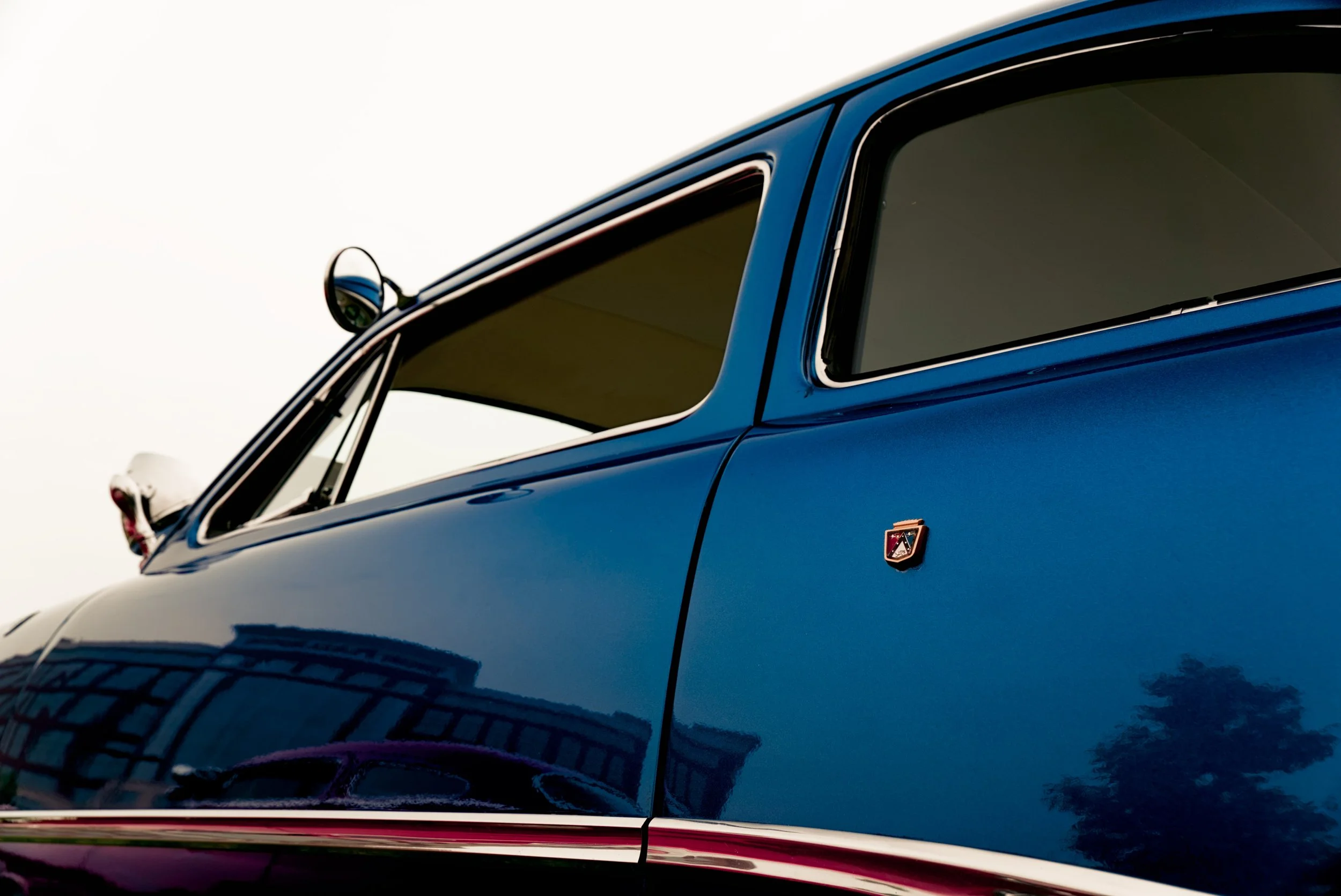
Those door poppers!
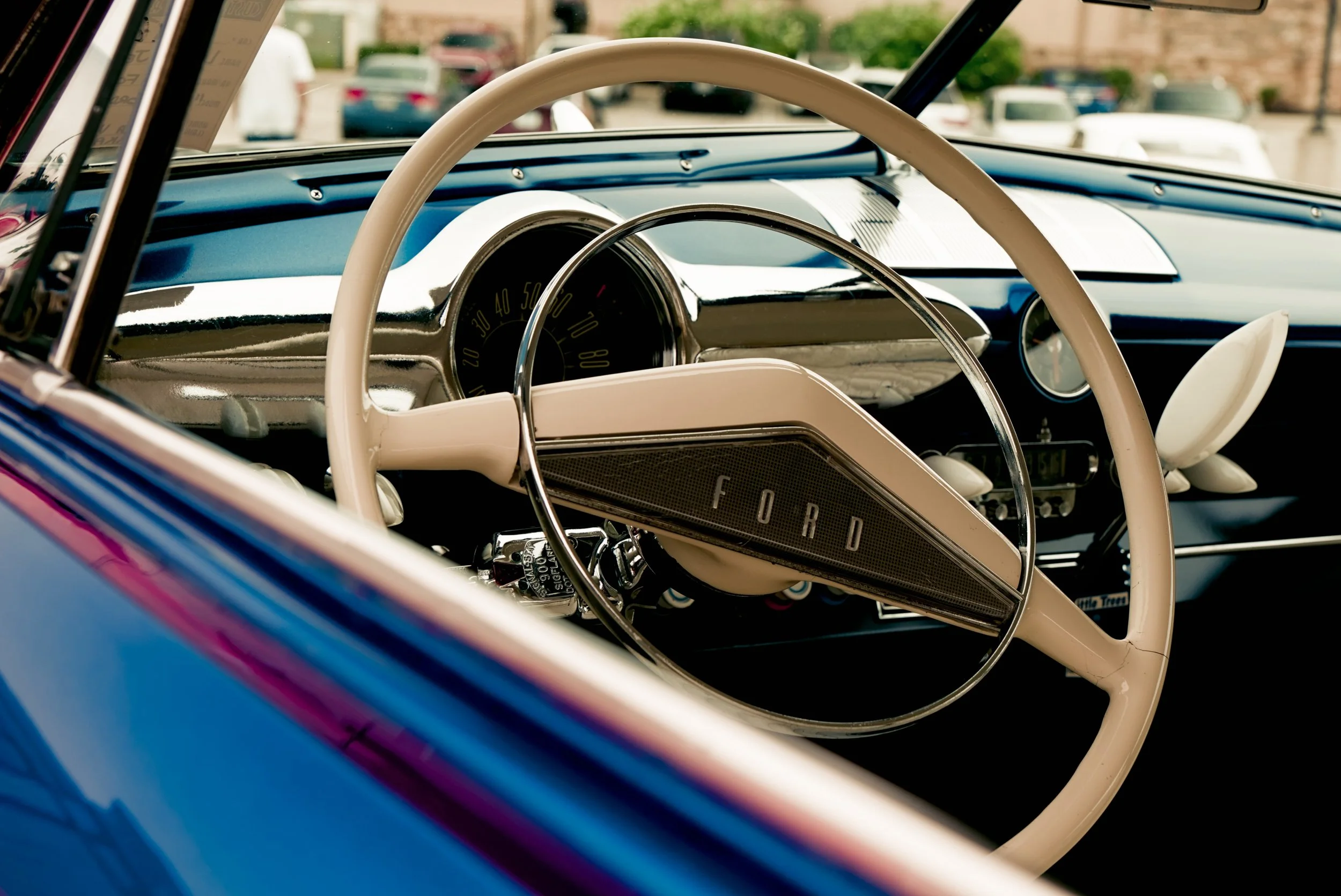
The ‘51 Ford Deluxe wheel brings a bump in style to the interior.
The Fordillac holds stories of a father and son, memories of the way things were actually done back in the day, and a rare combination of ingenuity, opportunity, and a vision for styling that’s subtle, yet outstanding at the same time. This car should show you why builders today are looking back to tradition not just for inspiration, but for a blueprint.
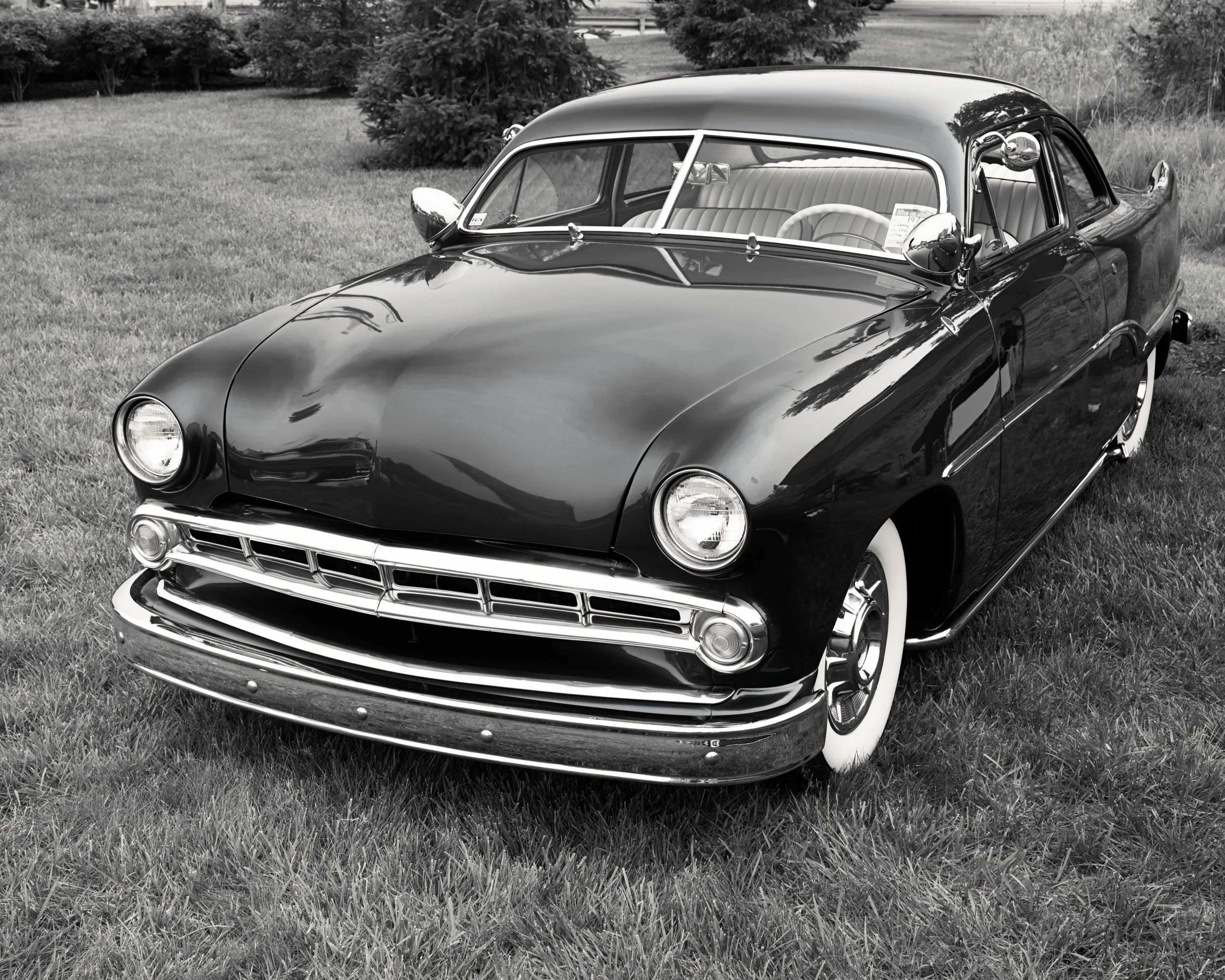
When you take the color away, this could have been an image from the mid 1950s